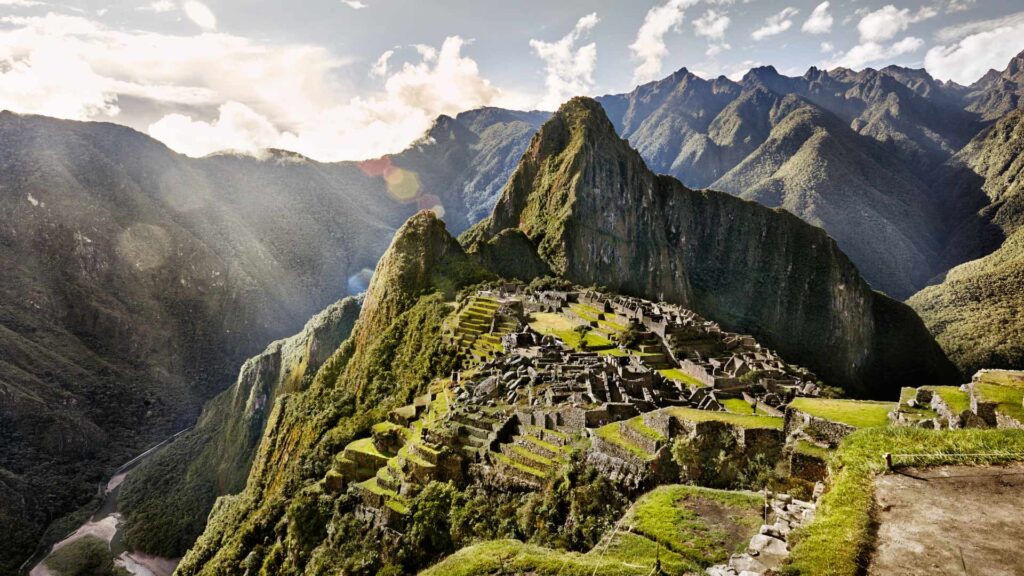
Right in front of those stunning Inca City ruins, folks often get pumped deciding which of the two big rises to tackle for top views. Both give amazing overlooks of the lost Inca spot but with their own tough bits, payoffs, and angles suiting different walkers.
Picking one over the other shapes your whole Inca City time since each has unique walking feels, hardness levels, and shot chances. Getting what sets each apart lets you choose smart based on your strength, schedule, and preferences.
Getting Huayna Picchu — The Usual Tough One
Overview:
-
Quechua name: Huayna Picchu (Young Peak)
-
Height: 2,693 meters
-
Path length: ~1.2 km out and back
-
Duration: 45 minutes to 1.5 hours
Huayna Picchu towers as the sharp back in classic Inca City shots. This pyramid-like rise gives one of Peru’s wildest walking thrills, handling tight rock steps Incas cut right into the side.
Highlights:
-
Sharp climb and rough ground, some parts need grabbing holds and careful steps on open edges
-
Strong tie to Inca City past with small ruins along the way
-
Moon Temple halfway down the far side — one of the best-kept Inca buildings in the Sacred Valley
Diving into Machu Picchu Peak — The Easier Big One
Overview:
-
Name: Machu Picchu Peak / Montaña Machu Picchu
-
Height: 3,082 meters
-
Path length: ~2.5 km each direction
-
Duration: 1.5 to 2.5 hours
Machu Picchu Peak offers another walking option fitting more strength levels. The path is stretched but less tricky, winding through mixed nature spots, gradually improving sights of the surrounding lands.
Highlights:
-
Solid trail zigzagging up through misty forest and plants
-
Plenty of stop spots and lookouts throughout
-
Top view shows full Inca building layout and nearby peaks — ideal for wide shots
Hardness and Body Needs
Huayna Picchu:
-
Harder with sharp parts, tight ways, and high drops
-
Requires solid heart, strong legs, sure footing on steep, bumpy ground
-
Narrow rock steps can be slick in rain; last bits involve climbing over rocks
-
Not recommended for kids, older adults, or slow movers
Machu Picchu Peak:
-
Broader path and milder slope
-
Suitable for families, bigger kids, and walkers wanting a chill pace
-
Needs basic shape, long walk but safer overall
Schedule and Ticket Rules
-
Both rises require tickets bought with Inca City entry
-
Huayna Picchu: 400 visitors daily, two time slots (7–8 AM, 10–11 AM), 3 hours to explore
-
Machu Picchu Peak: 800 visitors daily, walk starts 7–11 AM, 6 hours to finish
-
Easier timing for Machu Picchu Peak suits walkers not rushing or linking with other Inca City activities
Shot Chances and View Payoffs
Machu Picchu Peak:
-
Wide land angles, full Sacred Valley views
-
Catch misty forests, far ranges, and Urubamba River below
-
Broad sights show Andean scale
Huayna Picchu:
-
Classic high look at Inca City
-
Detailed setups of Inca City parts: farm steps, living spots, ritual areas
-
Sharp angle emphasizes ruins and surrounding peaks
Weather Bits and Time of Year
-
Both spots experience Sacred Valley misty forest weather, but heights and exposure affect comfort and safety
-
Machu Picchu Peak: Exposed to stronger winds, cooler air, but wider path handles light rain/mist better
-
Huayna Picchu: Lower height, more covered, often warmer; steep and tight paths risky when wet
-
Morning mist often wraps Huayna Picchu, creating a moody atmosphere but sometimes limiting views
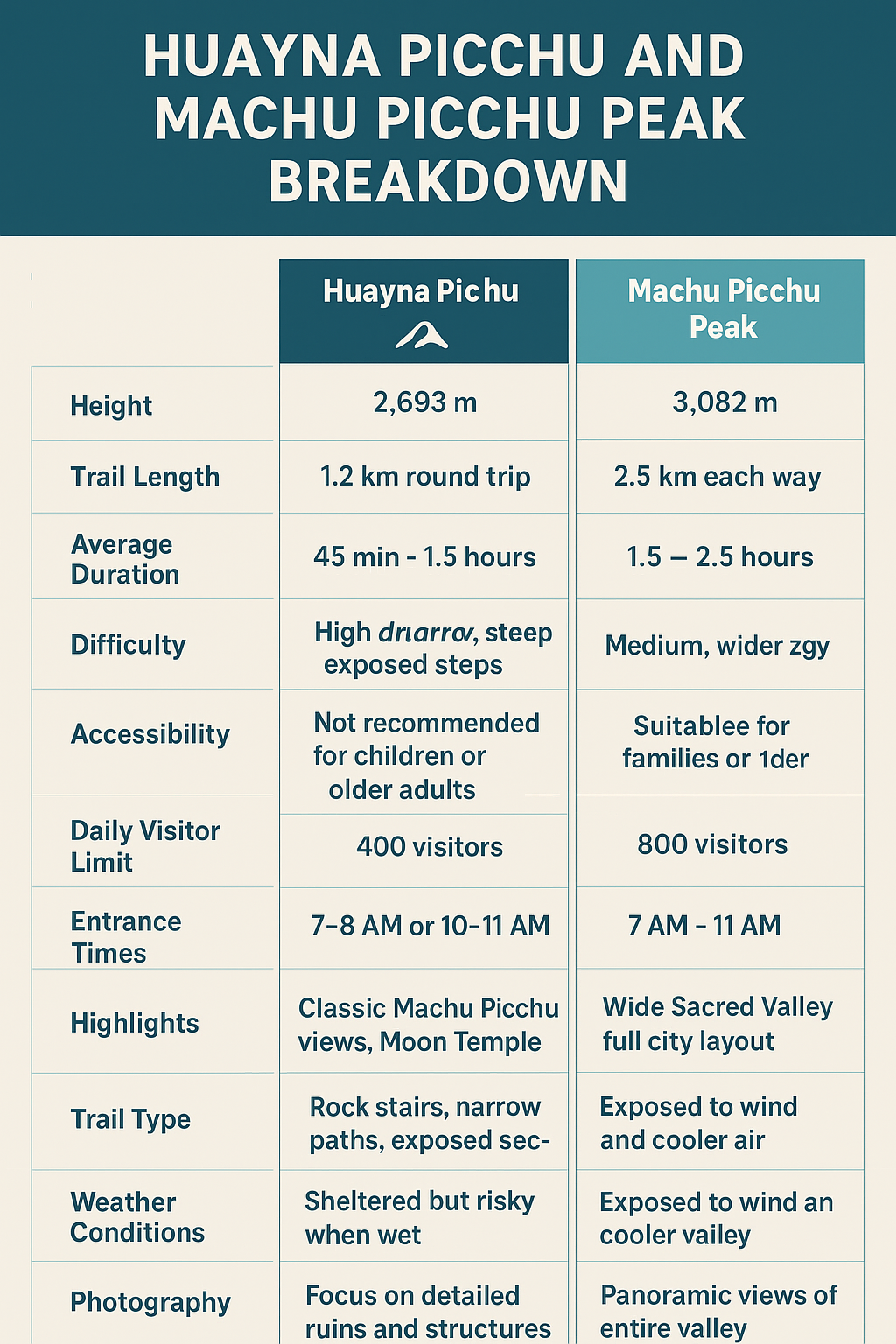
Comparative Table Huayna Picchu vs Machu Picchu
| Feature | Huayna Picchu | Machu Picchu Peak (Montaña) |
|---|---|---|
| Height | 2,693 m | 3,082 m |
| Trail Length | 1.2 km round trip | 2.5 km each way |
| Average Duration | 45 min – 1.5 h | 1.5 – 2.5 h |
| Difficulty | High – narrow and steep rock steps | Medium – wider zigzagging trail |
| Accessibility | Not recommended for children or older adults | Suitable for families and moderate-level hikers |
| Daily Visitor Limit | 400 visitors | 800 visitors |
| Entrance Times | 7–8 AM or 10–11 AM | 7 AM – 11 AM (flexible) |
| Highlights | Classic Machu Picchu views, Moon Temple, ancient ritual sites | Wide Sacred Valley views, full city layout, Urubamba River |
| Trail Type | Rock stairs, narrow paths, exposed sections | Solid trail, zigzag through cloud forest, multiple lookouts |
| Weather Conditions | More sheltered, risky when wet; morning mist common | More exposed to wind and cool air; handles light rain/mist better |
| Photography | Focus on detailed ruins and structures | Focus on panoramic views of the whole valley |
| Historical Connection | Strongly tied to Inca rituals and constructions | Complements Machu Picchu history with overall city perspective |